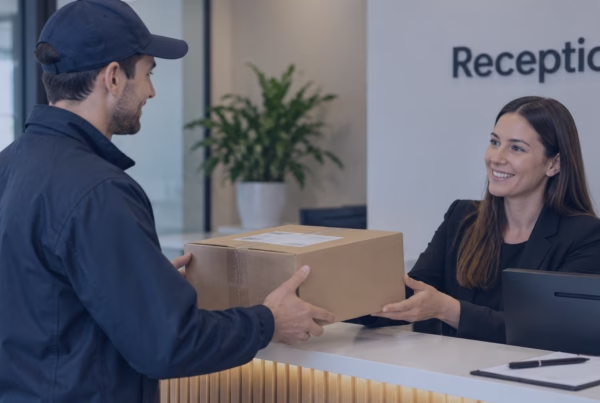
When a courier marks a parcel as delivered, most people assume it’s safely on its way to the recipient. But in a busy building, delivery to reception is often just the beginning.
The parcel still needs to be recorded, stored, located and handed over to the right person. Whether it’s an office, residential building or university, each of these steps creates an opportunity for delays, mistakes or missing parcels.
So what actually happens between the courier dropping off a parcel and the recipient collecting it?
1. The Parcel Arrives
The first handover happens when a courier delivers a parcel to reception, a mailroom or another designated collection point.
At this stage, someone needs to confirm that the item has arrived and identify who it’s for. If the delivery isn’t recorded properly, there’s already a gap in accountability.
A courier may have proof that the parcel reached the building, but that doesn’t necessarily tell you what happened to it afterwards.
2. The Parcel Needs Somewhere to Go
Once accepted, the parcel needs to be stored until the recipient can collect it.
In buildings receiving large numbers of deliveries, this can quickly become a challenge. Parcels accumulate behind reception desks, in storage rooms or on shelves, making it harder for staff to find the right item when someone comes to collect it.
Without an organised storage process, parcels can be misplaced, collected by the wrong person or left unclaimed for days.
3. The Recipient Needs to Know It’s Arrived
The next step is notifying the recipient.
In some buildings, this means a phone call or manually sending an email. Others rely on the recipient checking with reception to see whether anything has arrived.
Both approaches create extra work for staff and can delay collection.
With a digital tracking system such as OmniPost, parcels can be scanned on arrival and recipients notified automatically, reducing the need for manual communication.
4. The Final Handover
The last stage is getting the parcel into the recipient’s hands.
With traditional reception-based collection, someone needs to locate the parcel, confirm the recipient and hand it over. If there’s no record of that exchange, it can be difficult to establish who collected an item or when.
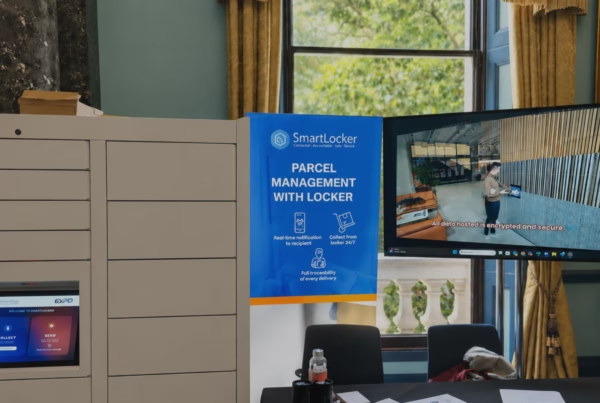
This is where Smart Parcel Lockers can make a difference.
Instead of waiting behind reception, parcels are placed into secure lockers. Recipients receive a notification with a unique collection code or QR code, allowing them to retrieve their delivery independently.
The system records the collection, creating a clear audit trail without requiring reception staff to manage every handover.
Making the Entire Parcel Journey More Reliable
The challenge isn’t simply receiving parcels. It’s maintaining visibility and accountability from the moment they enter a building until they’re collected.
By combining digital parcel tracking with smart lockers, buildings can reduce manual handling, keep deliveries secure and give recipients greater flexibility over collection.
For reception and facilities teams, that means less time spent chasing, searching for and handing over parcels.
Looking to improve parcel management in your building?
Explore our Smart Lockers and discover how secure, trackable parcel collection can simplify the delivery process or contact the ExPD team.